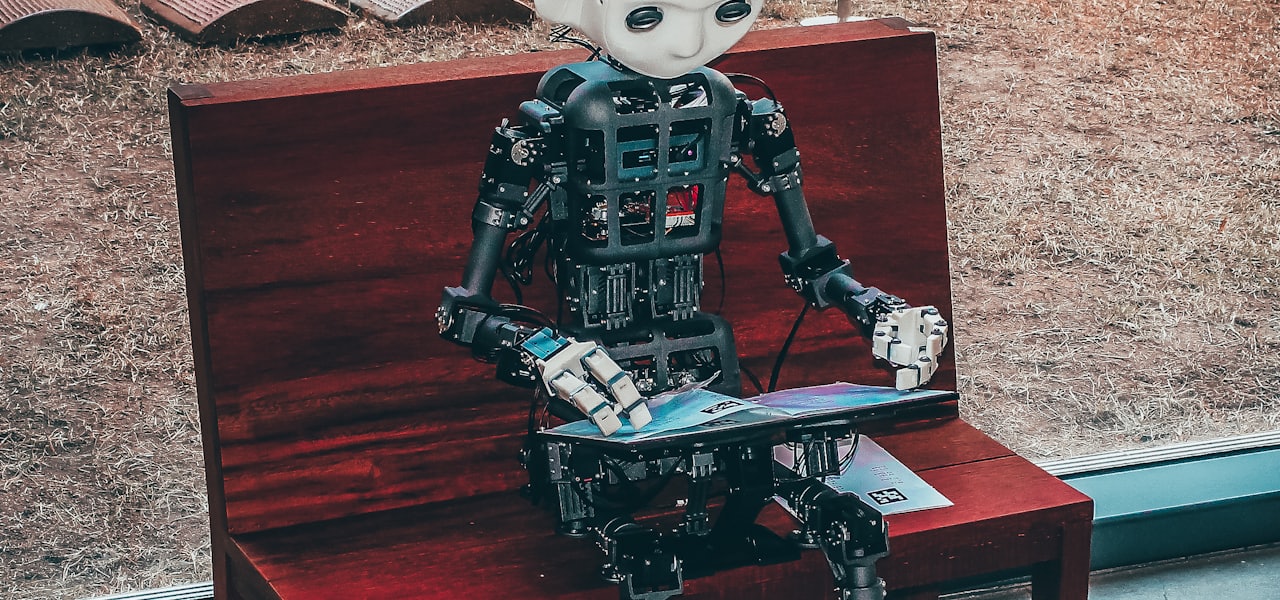
Embodied cognitive science is an interdisciplinary field of research, the aim of which is to explain the mechanisms underlying intelligent behavior. It comprises three main methodologies: the modeling of psychological and biological systems in a holistic manner that considers the mind and body as a single entity; the formation of a common set of general principles of intelligent behavior; and the experimental use of robotic agents in controlled environments. == Contributors == Embodied cognitive science borrows heavily from embodied philosophy and the related research fields of cognitive science, psychology, neuroscience and artificial intelligence. Contributors to the field include: From the perspective of neuroscience, Gerald Edelman of the Neurosciences Institute at La Jolla, Francisco Varela of CNRS in France, and J. A. Scott Kelso of Florida Atlantic University From the perspective of psychology, Lawrence Barsalou, Michael Turvey, Vittorio Guidano and Eleanor Rosch From the perspective of linguistics, Gilles Fauconnier, George Lakoff, Mark Johnson, Leonard Talmy and Mark Turner From the perspective of language acquisition, Eric Lenneberg and Philip Rubin at Haskins Laboratories From the perspective of anthropology, Edwin Hutchins, Bradd Shore, James Wertsch and Merlin Donald. From the perspective of autonomous agent design, early work is sometimes attributed to Rodney Brooks or Valentino Braitenberg From the perspective of artificial intelligence, Understanding Intelligence by Rolf Pfeifer and Christian Scheier or How the Body Shapes the Way We Think, by Rolf Pfeifer and Josh C. Bongard From the perspective of philosophy, Andy Clark, Dan Zahavi, Shaun Gallagher, and Evan Thompson In 1950, Alan Turing proposed that a machine may need a human-like body to think and speak: It can also be maintained that it is best to provide the machine with the best sense organs that money can buy, and then teach it to understand and speak English. That process could follow the normal teaching of a child. Things would be pointed out and named, etc. Again, I do not know what the right answer is, but I think both approaches should be tried. == Traditional cognitive theory == Embodied cognitive science is an alternative theory to cognition in which it minimizes appeals to computational theory of mind in favor of greater emphasis on how an organism's body determines how and what it thinks. Traditional cognitive theory is based mainly around symbol manipulation, in which certain inputs are fed into a processing unit that produces an output. These inputs follow certain rules of syntax, from which the processing unit finds semantic meaning. Thus, an appropriate output is produced. For example, a human's sensory organs are its input devices, and the stimuli obtained from the external environment are fed into the nervous system which serves as the processing unit. From here, the nervous system is able to read the sensory information because it follows a syntactic structure, thus an output is created. This output then creates bodily motions and brings forth behavior and cognition. Of particular note is that cognition is sealed away in the brain, meaning that mental cognition is cut off from the external world and is only possible by the input of sensory information. == The embodied cognitive approach == Embodied cognitive science differs from the traditionalist approach in that it denies the input-output system. This is chiefly due to the problems presented by the Homunculus argument, which concluded that semantic meaning could not be derived from symbols without some kind of inner interpretation. If some little man in a person's head interpreted incoming symbols, then who would interpret the little man's inputs? Because of the specter of an infinite regress, the traditionalist model began to seem less plausible. Thus, embodied cognitive science aims to avoid this problem by defining cognition in three ways. === Physical attributes of the body === The first aspect of embodied cognition examines the role of the physical body, particularly how its properties affect its ability to think. This part attempts to overcome the symbol manipulation component that is a feature of the traditionalist model. Depth perception, for instance, can be better explained under the embodied approach due to the sheer complexity of the action. Depth perception requires that the brain detect the disparate retinal images obtained by the distance of the two eyes. In addition, body and head cues complicate this further. When the head is turned in a given direction, objects in the foreground will appear to move against objects in the background. From this, it is said that some kind of visual processing is occurring without the need of any kind of symbol manipulation. This is because the objects appearing to move the foreground are simply appearing to move. This observation concludes then that depth can be perceived with no intermediate symbol manipulation necessary. A more poignant example exists through examining auditory perception. Generally speaking the greater the distance between the ears, the greater the possible auditory acuity. Also relevant is the amount of density in between the ears, for the strength of the frequency wave alters as it passes through a given medium. The brain's auditory system takes these factors into account as it process information, but again without any need for a symbolic manipulation system. This is because the distance between the ears for example does not need symbols to represent it. The distance itself creates the necessary opportunity for greater auditory acuity. The amount of density between the ears is similar, in that it is the actual amount itself that simply forms the opportunity for frequency alteration. Thus under consideration of the physical properties of the body, a symbolic system is unnecessary and an unhelpful metaphor. === The body's role in the cognitive process === The second aspect draws heavily from George Lakoff's and Mark Johnson's work on concepts. They argued that humans use metaphors whenever possible to better explain their external world. Humans also have a basic stock of concepts in which other concepts can be derived from. These basic concepts include spatial orientations such as up, down, front, and back. Humans can understand what these concepts mean because they can directly experience them from their own bodies. For example, because human movement revolves around standing erect and moving the body in an up-down motion, humans innately have these concepts of up and down. Lakoff and Johnson contend this is similar with other spatial orientations such as front and back too. As mentioned earlier, these basic stocks of spatial concepts are the basis in which other concepts are constructed. Happy and sad for instance are seen now as being up or down respectively. When someone says they are feeling down, what they are really saying is that they feel sad for example. Thus the point here is that true understanding of these concepts is contingent on whether one can have an understanding of the human body. So the argument goes that if one lacked a human body, they could not possibly know what up or down could mean, or how it could relate to emotional states. [I]magine a spherical being living outside of any gravitational field, with no knowledge or imagination of any other kind of experience. What could UP possibly mean to such a being? While this does not mean that such beings would be incapable of expressing emotions in other words, it does mean that they would express emotions differently from humans. Human concepts of happiness and sadness would be different because human would have different bodies. So then an organism's body directly affects how it can think, because it uses metaphors related to its body as the basis of concepts. === Interaction of local environment === A third component of the embodied approach looks at how agents use their immediate environment in cognitive processing. Meaning, the local environment is seen as an actual extension of the body's cognitive process. The example of a personal digital assistant (PDA) is used to better imagine this. Echoing functionalism (philosophy of mind), this point claims that mental states are individuated by their role in a much larger system. So under this premise, the information on a PDA is similar to the information stored in the brain. So then if one thinks information in the brain constitutes mental states, then it must follow that information in the PDA is a cognitive state too. Consider also the role of pen and paper in a complex multiplication problem. The pen and paper are so involved in the cognitive process of solving the problem that it seems ridiculous to say they are somehow different from the process, in very much the same way the PDA is used for information like the brain. Another example examines how humans control and manipulate their environment
TSheets
TSheets was a web-based and mobile time tracking and employee scheduling app. The service was accessed via a web browser or a mobile app. TSheets was an alternative to a paper timesheet or punch cards. == History == Based in Eagle, Idaho, TSheets was co-founded in 2006 by CEO Matt Rissell and CTO Brandon Zehm. In 2008, TSheets released a native employee time tracking app for the iPhone. In 2012, TSheets released an integration with accounting and payroll software QuickBooks. In 2015, TSheets accepted $15 million in growth equity funding from Summit Partners, bought a building in Eagle, Idaho, and opened a second location in Sydney, Australia. On 5 December 2017, Intuit announced an agreement to acquire TSheets. The transaction was valued at approximately $340 million of cash and other consideration and closed on 11 January 2018. After the transaction closed, Time Capture became a new business unit within Intuit's Small Business and Self-Employed Group with Matt Rissell assuming the leader role reporting to Alex Chriss. TSheets's Eagle, Idaho site became an Intuit location.
International Olympiad in Artificial Intelligence
The International Olympiad in Artificial Intelligence (IOAI) is an annual International Science Olympiad in the field of artificial intelligence (AI) for secondary education students under the age of 20. The first IOAI was held in Burgas, Bulgaria, in 2024. Each country or territory may send up to two teams, each consisting of up to four students supported by one leader. Participants are selected through a multi-stage National Olympiad in Artificial Intelligence (NOAI) and/or a Regional Olympiad such as the NAOAI or APOAI. Participants at the IOAI compete on an individual basis. As of 2025, there were 61 countries and territories participating in the IOAI. Three hundred students participated in IOAI 2025. As of 2026, 130 countries and territories are accredited for participation in the IOAI. == Competition Structure == The IOAI consists of three contests: the Individual Contest, the Team Challenge, and the GAITE contest. Medals are awarded based solely on the Individual Contest. === Individual Contest === The Individual Contest is the main competition of the IOAI in which contestants compete individually on separate computers and are not permitted to communicate during the contest. Medals are awarded solely on the basis of the total score from the two-day Individual Contest. The Individual Contest consists of two on-site contest days (six hours per day), preceded by an at-home practice round and an on-site practice session. In IOAI 2025, three at-home problems were released for preparation approximately one month before the on-site contest. Results from this at-home round do not affect final results. The first on-site contest day (Individual Contest 1) comprises three tasks as extensions and continuations of the at-home tasks, while the second day (Individual Contest 2) comprises two or three tasks which are novel and different from the at-home tasks. The Individual Contest tasks span various AI domains such as machine learning, natural language processing, and computer vision. The IOAI 2025 contest rules describe tasks as requiring typical machine-learning workflows, including writing code, fitting models on training data, and running inference on test data, using identical local machines and GPU resources (minimum 24 GB RAM). Tasks, datasets, and submissions are handled through a contest platform (Bohrium), including a web-based Jupyter notebook environment for GPU access. Internet access is restricted to a whitelist of documentation sites and an integrated compact large language model accessible within the platform. The use of external APIs are prohibited unless a task explicitly allows them. In IOAI 2025, each contest task was scored up to 100 points and could include multiple subtasks. Scores are normalized using a baseline solution and a maximum score derived from either a Scientific Committee solution or the best contestant submission. Contestants can view only their own scores during the contest; a live scoreboard may be available publicly outside the contest hall but is not permitted to be viewed by contestants during the contest. For non-English-speaking teams, the IOAI hold a translation session beginning three hours before each contest day in which team leaders review and may amend machine-translated task statements; translations must match the English original and are published after the contest. The IOAI committee also enforces quarantine restrictions during these translation sessions, where neither contestants or team leaders may not use cell phones, laptops, and other communication devices. === Team Challenge === The Team Challenge is a team-based component of the IOAI. The results of this part do not affect the distribution of medals. The IOAI 2025 rules describe it as a “creative and AI-oriented challenge” in which a team's contestants sit together and cooperate, with the format varying by year. In IOAI 2024, teams worked with existing AI image and video generation tools to produce a visual result. In IOAI 2025, teams were assigned to program a robot to complete various tasks. === GAITE Contest === The GAITE (Global AI Talent Empowerment) contest is a simplified version of the individual contest with a separate scoreboard, where participants may ask for hints. It is designed for countries and territories with limited International Science Olympiads history, and it awards alternative prizes instead of medals. == Awards Distribution == The top 50% of the participants in the individual contest receive gold, silver and bronze medals in ratio of 1:2:3, respectively. The top three individuals receive honorary trophies. As in other International Science Olympiads, if an individual is in the top 50% on one of the days, but does not receive a medal, they receive an honorary mention during the awards ceremony. The GAITE contest has similar cutoff logic, but receives a reward instead of a medal. The top three teams in the Team Challenge receive trophies. == National selection and regional competitions == National delegations are selected through country-level qualification processes referred to as National Olympiads in Artificial Intelligence (NOAI) or equivalent, which are widely known for their low success rates. Although the total number of participants worldwide is not published, available data indicate exceptionally competitive national pools; for example, Brazil reports over 716,000 competitors, while Russia reports more than 72,000. In addition, Regional Olympiads (for example, APOAI or NAOAI) provide continent-level competition and preparation platforms in most regions. === National Selection (National Olympiads in Artificial Intelligence) === Participating countries and territories select their students for the IOAI through a National Olympiad in Artificial Intelligence (NOAI) or an equivalent process. The names of these selection processes differ by country, but almost all of them (excluding newer countries participating in the GAITE contest) have in common that the process comprises multiple and/or extremely rigorous selection stages. United States / Canada – The USA–North America AI Olympiad (USAAIO) is a three-round process including an invitational in-person round and a subsequent selection camp, after which a national delegation is selected for IOAI. Russia – The Russian Olympiad in Artificial Intelligence is organized as a multi-stage process (training, qualification, main round, final). Organizers reported 72,316 registrations for the training round and 52,260 registrations for the qualifying round in one season, with tasks spanning mathematics, algorithms/programming, and machine learning; 977 students were disqualified following plagiarism checks. Japan – Japan's national selection consists of multiple stages, beginning with the Japan Olympiad in Artificial Intelligence (JOAI), a large-scale Kaggle-style competition. High-performing participants advance through additional assessment stages, including written solution reports and technical interviews. From this process, eight students are selected for the APOAI team, with four ultimately chosen to represent Japan at the IOAI. Brazil – Brazil's National Olympiad in Artificial Intelligence (ONIA) is conducted as a large competition which consists of progressive rounds of evaluation. It identifies 28 top students from over 716,000 competitors, four of which are selected for the IOAI. The competition is held in four phases across two cycles, including a two-step third phase and a final training-and-evaluation phase that selects a four-student national team. Singapore – Singapore's national Olympiad consists of two rounds: an online preliminary round (300 MCQs in 3 hours) selects the top 150 performers to advance to the final assessment, which includes both theory questions and Python programming tasks. Additional training and selection may follow the finals for top performers. Poland – The Polish AI Olympiad adopts a two-stage structure: an open online first stage (at-home tasks) and a second-stage competitive camp with 30 selected participants competing for a four-person IOAI team. France – The Olympiades Françaises d'Intelligence Artificielle (OFIA), organized by France-IOI, follow a three-stage structure consisting of an open online qualification round, a second selection round, and a multi-day national training camp and final in Paris. Bangladesh – The Bangladesh AI Olympiad (BdAIO) selects competitors in three rounds: the online preliminary round, the national finals, and the team selection camp. In 2025, 406 participants competed in the national finals. Norway – The Norwrgian AI Olympiad (NOKI) is a three-stage selection system; however, unlike other countries, its first two rounds are shared with the Norwegian Informatics Olympiad. The national Olympiad reports 1,180 participants in the first round. Hong Kong – The national Olympiad reported more than 800 preliminary-round entrants, narrowing through multiple rounds to 25 finalists, with a subsequent
Neuroshima
Neuroshima is a Polish tabletop roleplaying system inspired by such films and games as Mad Max, Fallout, The Matrix, Terminator and Deadlands: Hell on Earth. It is currently available only in Polish. The game's motto is "never trust the machines". Its designers include Michal Oracz and Ignacy Trzewiczek. == Setting == The game describes the United States in the mid-21st century, after a nuclear war started by a cybernetic revolt, which molded the continent into a barren wasteland. It seems that the reason for the war to break out was a sentient Artificial Intelligence commonly referred to as Moloch and made up of interconnected net of military computers: automated factories, military facilities, power plants and alike, that now cover the whole north of the U.S., from Oregon to the Great Lakes. On the south, there is another creation, called the Neojungle, that poses a threat to those who survived the war. It is a semi-intelligent carnivorous vegetation that grows very quickly, advancing north from Latin America. Right in the middle, there are humans. They are surrounded by mutant creatures, some bred by Moloch and hostile towards humans, and some simply animals and humans misshapen by nuclear fallout. On top of that there are Moloch's deadly machines lurking to complete the picture. But what is stressed in the book is that the worst enemy of humans is within them: hatred, indifference, greed. === Landscapes of Neuroshima === Car wrecks, ruined towns and villages, collapsed roofs on deserted houses, broken glass in the windows of abandoned gas stations fill the landscape of the United States of the middle of the 21st century. Technology is history - cars will not start, radios are jammed, no electricity whatsoever almost everywhere the characters go. Shops and malls are looted, prosperous villages are burned by gangers, and safe places are very sparse. === People in Neuroshima === No one knows how many people survived the war with machines, but it is estimated that their number oscillates around 2-3 million. Some people reverted to nomadic lifestyles and live in the deserts, some of them try to build the civilisation anew in devastated cities, some of them form gangs of highwaymen (called gangers), some of them just try to make a living by growing crops, and finally, there are those who just wander around the wasteland; the adventuring sort here is mostly represented by player characters. Each village they visit in this world is a discrete microcosm and nothing is certain as whether the inhabitants are welcoming or shoot strangers on sight. The continent is full of small, anonymous settlements, but there are places which aspire to become post-nuclear states. === Places in Neuroshima === In this world it is very important where you come from, and that is because people are prejudiced and afraid of strangers. Different places produce different kinds of people, and who you are is determined by where you are from. Examples: The Southern Hegemony - (commonly referred to as 'the Hegemony') - located in what was once Arizona, New Mexico and partially Texas. A place where brute force determines one's place in the society. Dominated by gangs and unhampered by Moloch, the Hegemony is a threat to neighbouring lands. Vegas - the only well-lit city in the post-apocalyptic world. Home to many playhouses and casinos, it attracts people from every part of the country. Mother Desert - if you were born in the desert, whenever you go away from civilisation, you feel at home. Many Native Americans still live out there and are doing fine - after all the warheads did not hit the deserts. Detroit - known for some of the best drivers and racers in the post-nuclear US. Home of many gangs, such as The Shultz (mafia styled), Hurons (punkers), The League (racers), Parker Lots (gothic assassins) and the Gas Drinkers (mutant barbarians). New York - a place which has established a strong government and would like to rebuild America. They maintain schools, factories and railways and send soldiers to fight Moloch. Surprisingly enough, they sometimes succeed. Texas - the healthiest place in America. Actually, the only place where one can find green vegetation. Modern Texans still grow crops, breed horses and herd cattle, like their ancestors in the 19th century did. The Appalachian Federation - a place ruled by feudal lords. They have a social class system, in which people are divided into nobility and peasantry. Thanks to its iron and coal deposits, it's one of the richest places in the post-nuclear U.S. The Outpost - A mobile settlement run by scientists who aim to destroy Moloch. In coalition with New York, they manage an army, which is yet to stop Moloch's advance south. They steal technology from the machines they destroy and apply it to their own advantage. == System == The game uses its own, custom system of rules. The dice you use is d20. This system does not have an official name, but it is unconnected to the d20 system, as it typically uses three twenty-sided dice. === Four colours === Neuroshima relies on the division of the gameplay into something the authors called Four Colours, namely steel, chrome, rust and mercury. The choice of a particular colour is made by the gamemaster (the decision can be consulted with the players in order to enhance the game experience) and determines the mood, atmosphere and the type of events/characters present in the story. The name of the colour itself implies the kind of gameplay it will symbolise. These colours are: Steel - this kind of gameplay is characterised by a slightly optimistic attitude towards the world. The aim is to raise the spirit of the characters by showing them that the war with the machines that is going on may be a difficult one, but it is not unwinnable, and that humans, when strong and united, can build the world anew. Example of a story: a unit of soldiers dispatched from the Outpost is sent to build a bunker and establish a relay base far in the north in order to plan a counter-tactic against Moloch's advance south. Chromium - is characterised by a hedonistic attitude. The characters are supposed to enjoy anything that is left from the world after the war and the story is supposed to allow them to do that. Example: the characters are offered a well-paid job by a local ganger boss who extorts wares from local tradesmen. Their job is to drive around the county and pick up the extorted items and trade it for drugs. Rust - a depressing, pessimistic mood. The characters will encounter rust, dilapidation and ruin everywhere they go. All the elements and NPCs of a story played in this mood are supposed to put the characters down and destroy their spirit. Example: the characters, badly wounded after a gunfight and robbed of all their possession find refuge in a village which is constantly raided by gangers. The characters' quest is to repel those attacks, but the enemies outnumber them and are well equipped, whereas the characters have nothing to fight with. Mercury (Quicksilver) - the most depressing side of the game; usually stories played in this mood end with the death of all the characters. The aim of this mood is to show that any kind of action undertaken is futile and that the war is already over, hence all the people are already dead, which is a fact they just need to realise. Example: a group of soldiers stationed in a bunker is awaiting an attack by mutants. They are well-armed and trained, but there is a mistake in the intelligence they were given and they do not know yet that they are seriously outnumbered. The attack commences at dusk and it is already too late to retreat, so the characters decide to seal off the bunker, hopeful that the mutants will not be able to get inside and simply go away. The mutants attack the bunker with chemical weapons instead. The characters do not have enough gas masks to go around. As an effect, those strong enough will kill the weaker ones to get their masks, not knowing that the mutants will blow up the sealed entrance the following morning. == Official rulebooks and sourcebooks == The current edition is 1.5 [1]. Since the release of the game in 2003, sourcebooks have been appearing. The game keeps growing bigger with every add-on, as well as the storyline, which is updated in those sourcebooks and in Space Pirate (pl. Gwiezdny Pirat) magazine, also published by Portal. === List of released rulebooks and sourcebooks === Neuroshima 1.0 - the original edition of the core rulebook (out of print). Neuroshima 1.5 - enhanced and revised core rulebook, with new material added and some material cut out. Wyścig (The Race) - sourcebook dedicated to cars and racing; contains rules concerning building your own vehicle and new character classes connected with driving. Gladiator - sourcebook describing in detail the "Gladiator" character class. Supplement (Supplement) - sourcebook revising the core rulebook. Detroit - sourcebook describing the city of Detroit, its inhabi
Rifts (role-playing game)
Rifts is a multi-genre role-playing game created by Kevin Siembieda in August 1990 and published continuously by Palladium Books since then. It takes place in a post-apocalyptic future, deriving elements from cyberpunk, science fiction, fantasy, horror, western, mythology and many other genres. Rifts serves as a cross-over environment for a variety of other Palladium games with different universes connected through "rifts" on Earth that lead to different spaces, times, and realities that Palladium calls the "Rifts Megaverse". Rifts describes itself as an "advanced" role-playing game and not an introduction for those new to the concept. Palladium continues to publish books for the Rifts series, with about 80 books published between 1990 and 2011. Rifts Ultimate Edition was released in August 2005 and designed to update the game with Palladium's incremental changes to its system, changes in the game world, and additional information and character types. The web site is quick to point out that this is not a second edition but an improvement and expansion of the original role playing game. == Background == The RPG had the tentative title Boomers, named after the original name for the Glitter Boy power armor until Kevin Siembieda changed the name after finding out it was in use for Bubblegum Crisis. == Setting == The Rifts world is Earth, but hundreds of years into the future. Ley lines, lines of magic energy, criss-cross the earth forming supernatural geographic areas such as the Bermuda Triangle. Points where Ley Lines intersect, called a nexus, are places of powerful magic, such as the Pyramids of Giza and Stonehenge. If a Ley Line nexus energy surges or is purposely activated, the fabric of space and time can be torn, creating a rift - a hole in space-time leading to another place, time, or dimension. Ley lines contain magical energy called Potential Psychic Energy (PPE), which is found in various places, objects, and animals and is particularly strong in children. An adult's level of PPE can vary based on other factors. PPE also allows Psionics which uses energy known as Inner Strength Points or ISP. Psychic phenomenon (more commonly called psionics) can also vary from individuals, ranging from none at all to Master level abilities. Psychic abilities can manifest in virtually any way imaginable. Some psychics develop differently, such as psi-stalkers; human mutants that feed on psychic energy. === Earth === Rifts begins with two future-historical premises: first, a golden age of humanity occurs, with tremendous advances in science, technology, military, and society. Humanity as a whole is at peace as a majority of Earth's nations decide to cease world war and begin to share ideas and technology freely. Much of the Solar System is conquered, humanity's wars will end, and harmony will reign. This golden age is followed by an unknown cause near the winter solstice and a rare planetary alignment, causing a disaster that cascades into tremendous destruction via a ripple effect. The cataclysm begins with unprecedented storms, earthquakes, tsunamis, and volcanic eruptions, which kill millions of people. The Ley Line networks that crisscross the globe are energized, causing rifts to open both on Earth and throughout the Megaverse. For hundreds of years after the holocaust, many creatures, both mythical beasts and aliens, come through the Rifts to wreak havoc. The old world gone, a new Dark Age dawns and humanity's shrinking population is reduced, due to catastrophe and domestic failure, immeasurably. This period is covered in Palladium's Rifts Chaos Earth spin-off series. Rifts initially takes place in 101 P.A. (equivalent to the year 2387) 289 years after this event. The "Post-Apocalypse" calendar was established by the formation of the Coalition States in 2286. By this time, most of the disasters have quieted down, though Earth is still bathed in PPE. The planet's mystical energy has attracted aliens from other dimensions, who continue to arrive through the Rifts both accidentally and deliberately. The humanoid creatures that arrive on Earth are referred to as Dimensional Beings (called D-Bees). Some resemble familiar fantasy races, such as elves and dwarfs, while others were created specifically for the game setting. Non-humanoid creatures have also arrived, including monstrous creatures and mystical demons. To cope with these natural, supernatural, and alien menaces, the human race has adapted in a variety of ways, many of them borrowed from the technological developments of the lost Golden Age. Powered armor suits and giant vehicles are frequently used to combat the dangers of Rifts, but more invasive augmentation is common. This has three basic categories: "Juicers" augment themselves chemically, the "Borgs" augment themselves mechanically, and "Crazies" use performance-enhancing brain implants. All such augmentations boost strength, speed, endurance, and dexterity to superhuman levels. However, all come at great cost. Chemicals cause the body to wear out faster, decreasing life span to a few years. Mechanical Borg augmentation causes a loss of humanity when those with multiple limb and organ replacements become more machine than human. Brain implants cause mental instability ranging from mild phobias to crippling neurosis or psychosis. ==== North America ==== The strongest power in North America is the Coalition States (CS), which is based in the arcological city of Chi-Town and lays claim to northern Illinois, all of Iowa, the Texas Panhandle, Missouri, and the eastern half of Ontario, Canada. The second greatest power is Free Quebec, a former Coalition State that seceded following a civil war with the other Coalition States. Mexico is ruled by a group of vampire kingdoms, who treat humans as little more than food. North of the Rio Grande, west of Texas and roaming most of the American Southwest are large nomadic bands/tribes of bandits who collectively form the Pecos Empire, consisting of El Paso, Los Alamos, and Houstown. Much of the western United States has more or less willingly reverted to a mix of modern and past technology akin to the Wild West. The Royal Canadian Mounted Police managed to survive the great cataclysm, though Canada itself did not. The Mounties have become an independent law enforcement force called the Tundra Rangers, patrolling the northern wilderness. The Midwest, both upper and central, is home to most of North America's population. The Manistique Imperium and Northern Gun in Michigan's Upper Peninsula, both Coalition allies, are among the largest weapons manufacturing areas on the continent. New Lazlo is one of the largest cities in Michigan's southern portion. Chillicothe in Missouri is a large supplier of Coalition food processing and growing. Missouri's southern half, home to the city-states of Whykin (Poplar Bluff) and Kingsdale (West Plains) are in constant opposition to the CS and claim independence. Arkansas is home to the independent CS ally El Dorado. Southern Illinois and the Ohio Valley is home to the Federation of Magic. Also in the Ohio Valley is Psyscape, a city-state founded by psychics. Tolkeen was a major city in the former Minneapolis region in early Rifts books; the city welcomed users of magic. A military campaign made by the Coalition States (which is the primary event of 109 PA) resulted in the magic-user kingdom being wiped off the map. In the Northeast, the city-state of Lazlo, named after supernatural researcher and writer Victor Lazlo, was built upon the ruins of Toronto. This major center of civilization is well known as a melting pot of humans, D-Bees and other beings, and is the home of Techno-Wizardry. Mad Haven is the name given to the ruins of Manhattan; tectonic forces during the cataclysm have moved it into the coast, creating a peninsula. It is seen by most denizens of Rifts Earth as a refuge of demons and madness. ==== South America ==== The return of Atlantis caused the Amazon River basin to flood most of western South America, giving it the nickname The Land of a Thousand Islands. The Empire of the Sun, consisting of Cuzco, Nazca, Arequipa and Lima, created a wide range of technology and magic, including magic derived from the Nazca lines. In Argentina, the Silver River Republics of Cordoba (the South American Chi-Town), Santiago (one of the most tolerant human nations on Rifts Earth), Achilles (a nation founded by mutants), and New Babylon, a nation where humans and aliens coexist) have thrived and created nations whose strength rivals that of the CS. In Bolivia, freed Human and D-Bees formed the Megaversal Legion: a mercenary company with one of the highest levels of technology on Rifts Earth. ==== Europe ==== England has become a vast wilderness again, broken up by the occasional giant Millennium Tree or feudal kingdom, complete with a New Camelot and a new King Arthur, partially being manipulated by an alien intelligence disguised as Merlin. Also the magic of
Object model
In computing, object model has two related but distinct meanings: The properties of objects in general in a specific computer programming language, technology, notation or methodology that uses them. Examples are the object models of Java, the Component Object Model (COM), or Object-Modeling Technique (OMT). Such object models are usually defined using concepts such as class, generic function, message, inheritance, polymorphism, and encapsulation. There is an extensive literature on formalized object models as a subset of the formal semantics of programming languages. A collection of objects or classes through which a program can examine and manipulate some specific parts of its world. In other words, the object-oriented interface to some service or system. Such an interface is said to be the object model of the represented service or system. For example, the Document Object Model (DOM) is a collection of objects that represent a page in a web browser, used by script programs to examine and dynamically change the page. There is a Microsoft Excel object model [1] for controlling Microsoft Excel from another program, and the ASCOM Telescope Driver is an object model for controlling an astronomical telescope. == Features == An object model consists of the following important features: === Object reference === Objects can be accessed via object references. To invoke a method in an object, the object reference and method name are given, together with any arguments. === Interfaces === An interface provides a definition of the signature of a set of methods without specifying their implementation. An object will provide a particular interface if its class contains code that implement the method of that interface. An interface also defines types that can be used to declare the type of variables or parameters and return values of methods. === Actions === An action in object-oriented programming (OOP) is initiated by an object invoking a method in another object. An invocation can include additional information needed to carry out the method. The receiver executes the appropriate method and then returns control to the invoking object, sometimes supplying a result. === Exceptions === Programs can encounter various errors and unexpected conditions of varying seriousness. During the execution of the method many different problems may be discovered. Exceptions provide a clean way to deal with error conditions without complicating the code. A block of code may be defined to throw an exception whenever particular unexpected conditions or errors arise. This means that control passes to another block of code that catches the exception.
Minne Atairu
Minne Atairu is a Nigerian interdisciplinary artist, a recipient of the 2021 Global South Award Lumen Prize for Art and Technology. She generates synthetic Benin Bronzes through recombination of historical fragments, sculptures, texts, images, and sounds. == Early life and education == Atairu was born in Benin, Nigeria. She holds a bachelor's degree in art history from the University of Maiduguri in Maiduguri, Nigeria; a master's degree in museum studies from the George Washington University in Washington, D.C.; and a doctorate in art education from Teachers College, Columbia University in New York City. Her academic research integrates artificial intelligence, art/museum education and hip-hop based education. == Works == Atairu's artmaking involves using artificial intelligence (AI; such as StyleGAN, GPT-3) to make artwork. She uses tools such as Midjourney and Blender software to develop her works. === Mami Wata === Her first work is a Yoruba goddess called Mami Wata where she used Midjourney in generating the images. === To the Hand === For her 2023 installation To the Hand at The Shed arts center, she worked with Blender to convert text into 3D-printed sculptures made of corn starch or sugarcane infused with bronze. The rings of ground terra-cotta that surround the sculpture represent the walls and deep moats of Benin. == Publications == Atairu, Minne (February 1, 2024). "Reimagining Benin Bronzes using generative adversarial networks". AI & Society. 39 (1): 91–102. doi:10.1007/s00146-023-01761-7. ISSN 1435-5655.